11 // Facility 02: Project Tartarus
TERRESTRIAL ANTIMATTER STORAGE | SUBTERRANEAN INSTALLATION
Location: The Laurentian Craton (Canadian Shield) — tectonically stable for 2.5 billion years. Depth: 2 km below surface. Geometry: Vertical cylinder, 200 m diameter, 2,000 m depth. Design philosophy: Passive safety. The facility's resting state — even with zero power and total computer failure — must force the antimatter toward minimum-damage outcomes.
The facility is not a building. It is a geomechanical machine built into the Earth's crust.
LAYER 0: THE QUANTUM TRAP
Highfield Magnetics Ioffe-Pritchard geometry at ultra-high field strength. Persistent-current superconductors — once charged, the current flows indefinitely without external power as long as cryogenic temperature is maintained. Vapor Vacuum getter-skin liner (Zr-V-Fe alloy) maintains 10−14 Torr.
LAYER 1: THE FIRST WALL
Metallic Sciences isotopically enriched tungsten-184. Highest melting point of any metal (3,422°C). Low neutron capture cross-section. Inner 5 cm is ablative — designed to vaporize in a containment failure, with the phase change absorbing energy and preventing shockwave coupling to the outer structure.
LAYER 2: THE ENERGY SINK
A 10-meter thick sphere of super-cooled, pressurized water mixed with boron-10 beads (Phase Flash). Water absorbs thermal energy; boron-10 captures the neutron flood from secondary nuclear reactions; steam expansion converts the sharp pressure pulse into a slower, distributed force.
LAYER 3: THE SEISMIC ROOT
The 50,000-tonne core assembly floats inside the shaft on Highfield Magnetics magnetic levitation suspension, seismically decoupled from the surrounding geology. If the core fails, the shockwave must cross an air gap before reaching rock. Six hydraulic deadman struts provide viscous-damped soft landing if levitation fails.
The Chimney
The vertical shaft above the core is rifled — helical channels direct blast pressure and plasma upward, not outward. The concrete cap at the surface is designed to blow off cleanly. In a worst-case containment failure (full gram-scale inventory), a massive vertical column of fire exits the shaft into the stratosphere. The facility is destroyed. Surrounding infrastructure, at 10+ km standoff distance, survives.
The Robotic Ecology
No human enters the core. Foundation Kinetics machines maintain the installation.
Small hexapedal inspection robots, radiation-hardened in lead-gold alloy. Crawl over magnetic coils performing ultrasonic micro-fracture detection. Disposable — circuits degrade from background radiation. Replaced every 30 days from on-site fabrication.
Massive hydraulic frames for heavy payload manipulation. Operate in pairs — if one fails, the other lifts both payload and disabled unit. Hard-wired optical fiber control only; wireless communication forbidden near the traps.
Last-resort units with Cellular Foundry bio-electronic hybrid controllers. Biological neural tissue survives EMP and radiation types that destroy semiconductor logic. Designed for manual valve actuation and mechanical override when all digital systems have failed.
Power and Independence
Tartarus is not connected to the North American power grid. It operates on a dedicated Stellar Furnace reactor (5 GW) with a 50-year on-site boron-11 fuel supply. If the fusion reactor fails, a molten salt thermal battery sustains steam turbine operation for 30 days — sufficient time to safely spin down the magnetic traps through controlled inventory reduction.
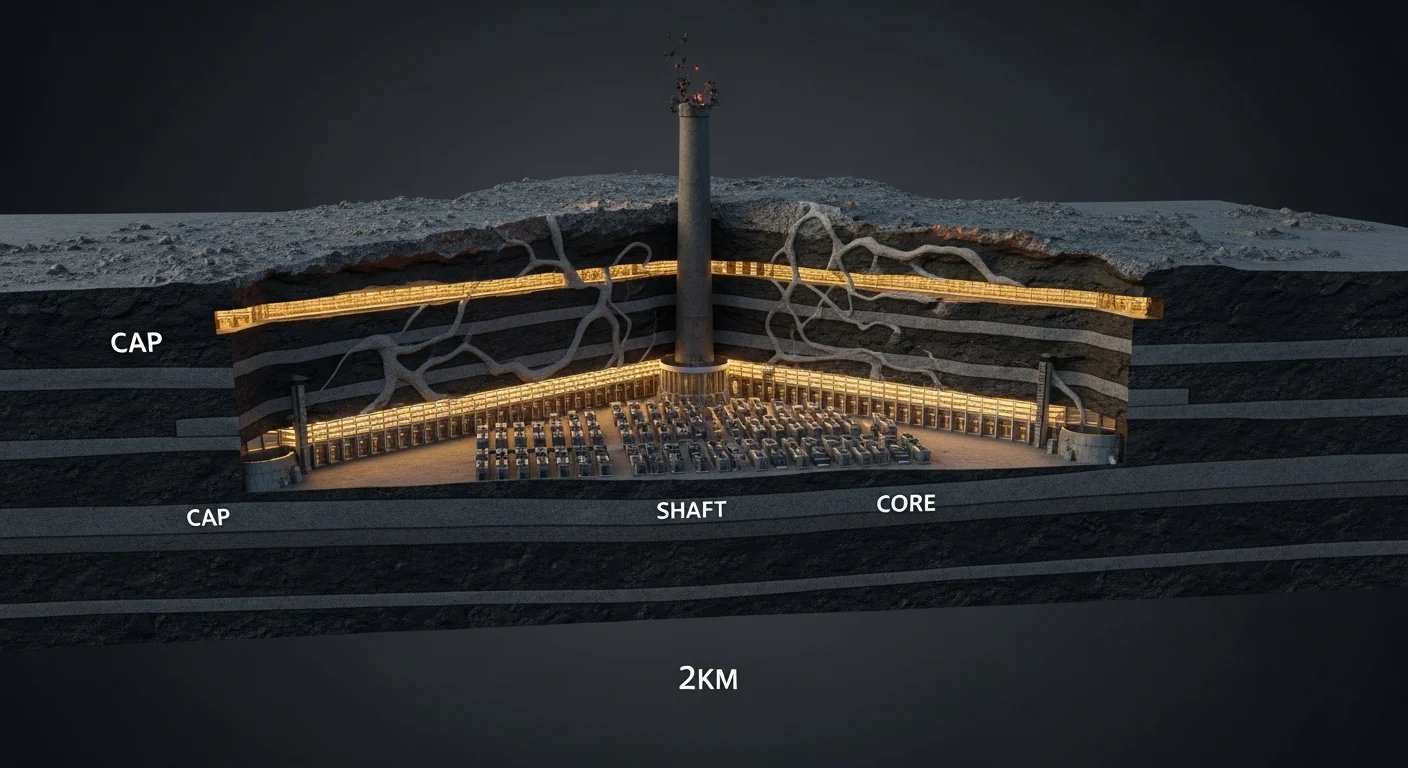
FIG 4.0: PROJECT TARTARUS — CROSS-SECTION