10 // Facility 01: Icarus Station
MERCURY HIGH ORBIT | FAR-FUTURE PRODUCTION INFRASTRUCTURE
Strategic Vision: Icarus Station is a far-future infrastructure concept. The energy densities and orbital infrastructure described here exceed current technology by many orders of magnitude. It is included as the logical endpoint of the antimatter production scaling pathway — the architecture that becomes viable when civilization-scale energy is available in space.
Earth receives 1,360 W/m² of solar flux. Mercury, at 0.39 AU, receives 9,080 W/m² — a 6.7× multiplier. The Icarus concept exploits this proximity to power a solar-pumped laser system targeting the Schwinger limit: the critical electric field strength (1.3 × 10¹⁸ V/m) at which the quantum vacuum spontaneously produces electron-positron pairs.
The Schwinger field corresponds to a focused laser intensity of approximately 4.6 × 1029 W/cm². Current state-of-the-art high-power lasers (ELI-NP in Romania) achieve approximately 1023 W/cm² at focus. The gap is six orders of magnitude in focused intensity. This is a significant but potentially addressable gap given orbital-scale solar collection: a 10,000-satellite mirror swarm focusing Mercury-orbit solar flux into a coherent X-ray laser pulse could, in principle, bridge this gap through spatial and temporal concentration of energy. The physics of the Schwinger mechanism is well-established (Schwinger, 1951). The engineering is not remotely feasible with current or near-future technology.
THE MIRROR FIELD
Material: Metallic Sciences polished beryllium-gold foil. Scale: 10,000 independent satellites in Mercury orbit. Function: Collect and focus sunlight onto the Icarus Station laser array.
THE LASER ARRAY
Type: Maxwell Continuum direct-solar-pumped iodine lasers. Sunlight hits the lasing medium directly — no photovoltaic conversion losses. Combined output target: exawatt-class (1018 W) per pulse, focused to diffraction-limited spot.
THE BREAKDOWN CHAMBER
Vapor Vacuum event chamber at the laser focal point. Counter-propagating pulses collide, creating a standing-wave intensity maximum. At Schwinger threshold, electron-positron pairs materialize from the vacuum. Highfield Magnetics pulsed separator bends electrons and positrons in opposite directions for collection.
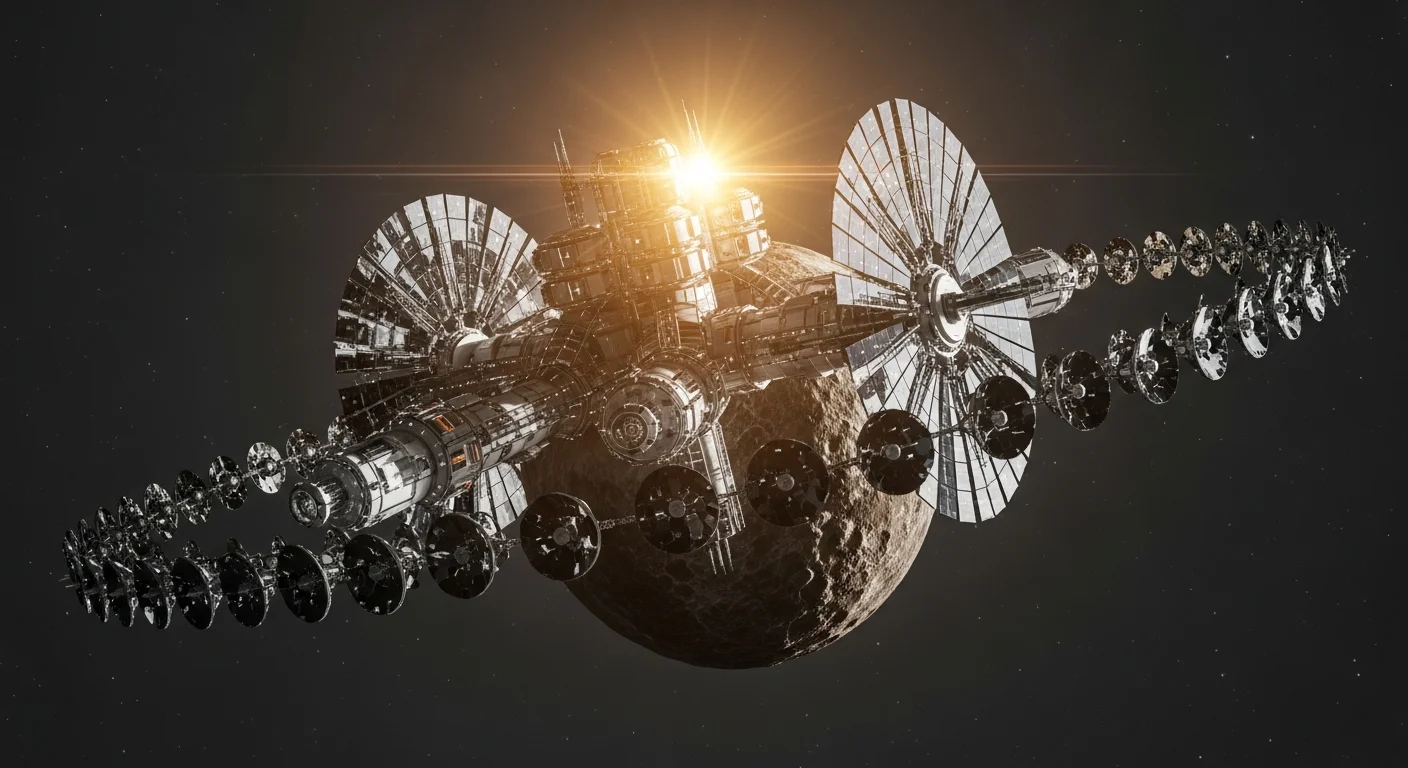
FIG 3.0: ICARUS STATION — MERCURY ORBITAL PRODUCTION CONCEPT