Antimatter Production
PENNING TRAP ARRAYS & ANTIHYDROGEN SYNTHESIS

PENNING TRAP ARRAY — ANTIMATTER CONTAINMENT
One gram of antimatter contains the energy of a nuclear bomb. The world produces two nanograms per year. We are engineering the path from nanograms to grams.
Matter-antimatter annihilation is the most energetic reaction permitted by physics. When a proton meets an antiproton, both particles convert entirely to energy — E = mc² — producing charged and neutral pions that decay into gamma rays, muons, and neutrinos. The energy density is 9 × 10¹⁶ J/kg: nine orders of magnitude above chemical combustion, six above nuclear fission, and two above deuterium-tritium fusion. No other reaction in the Standard Model releases a larger fraction of rest mass as usable energy.
Current global antimatter production is measured in nanograms per year. CERN's Antiproton Decelerator facility — the only operational source of low-energy antiprotons on Earth — produces approximately 107 antiprotons per batch, perhaps 1015 per year of operation. This is roughly 1.7 nanograms. The cost, fully loaded against CERN's operating budget, is on the order of $1013 per gram — a number that reflects not a physical limit but an engineering one. The underlying energy cost of pair production is approximately 2 GeV per antiproton, or roughly $1–10 billion per gram at industrial electricity prices. The gap between the thermodynamic floor and the current cost is a yield problem, not a physics problem.
Antimatter Production is a long-horizon research division of Laks Industries investigating the engineering of that yield problem: how to produce, decelerate, cool, trap, and store antimatter at scales relevant to energy and propulsion applications. The long-term program objective is gram-scale antihydrogen production per year. The distance between current capability and that objective is approximately seven orders of magnitude. This document describes the architecture intended to close that gap.
Technical Architecture
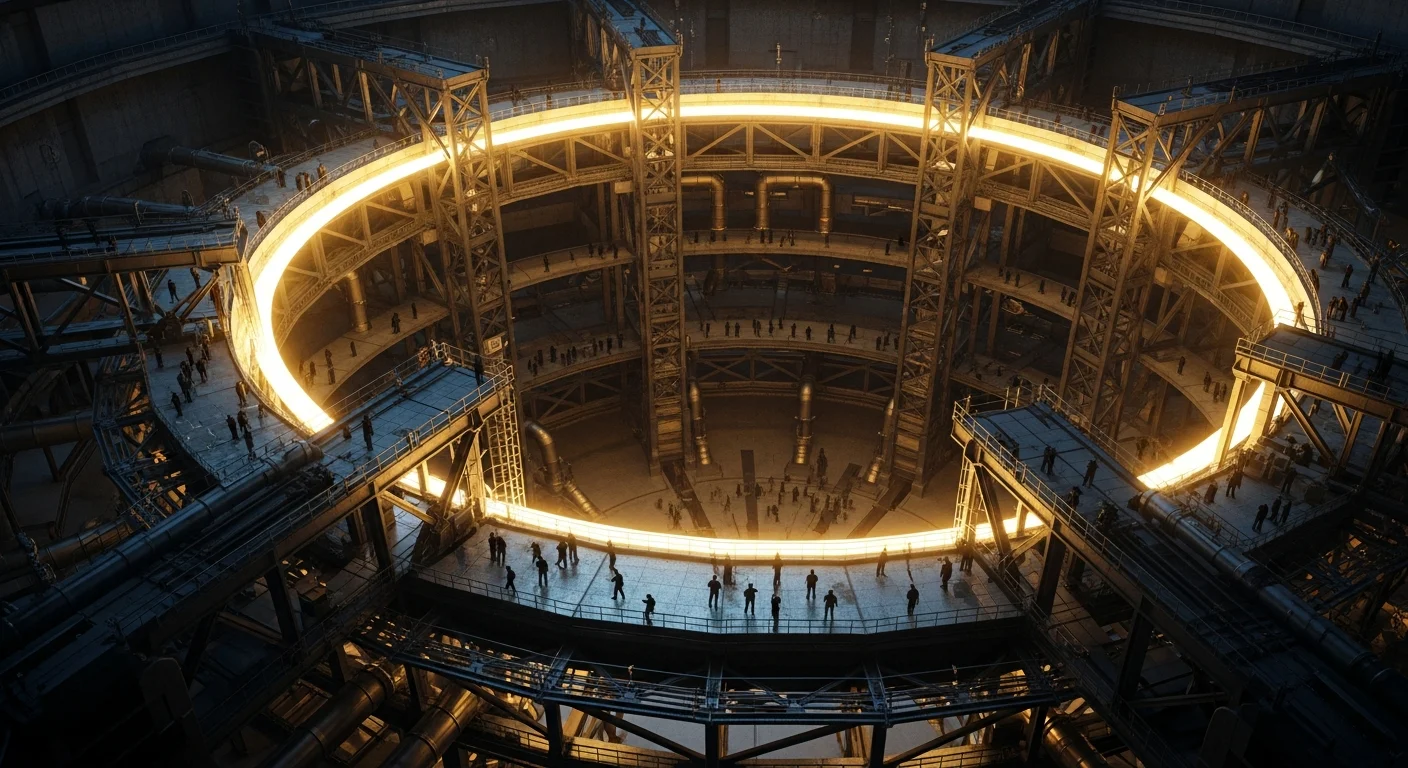
COST CURVE
SECTION INDEX
CONCEPTS

EMBER CONVOY
01 // Production Physics
Pair production, capture efficiency, deceleration, and storage
03 // Application Tiers
Positron, antiproton, antihydrogen, and gram-scale production tiers
SYSTEMS
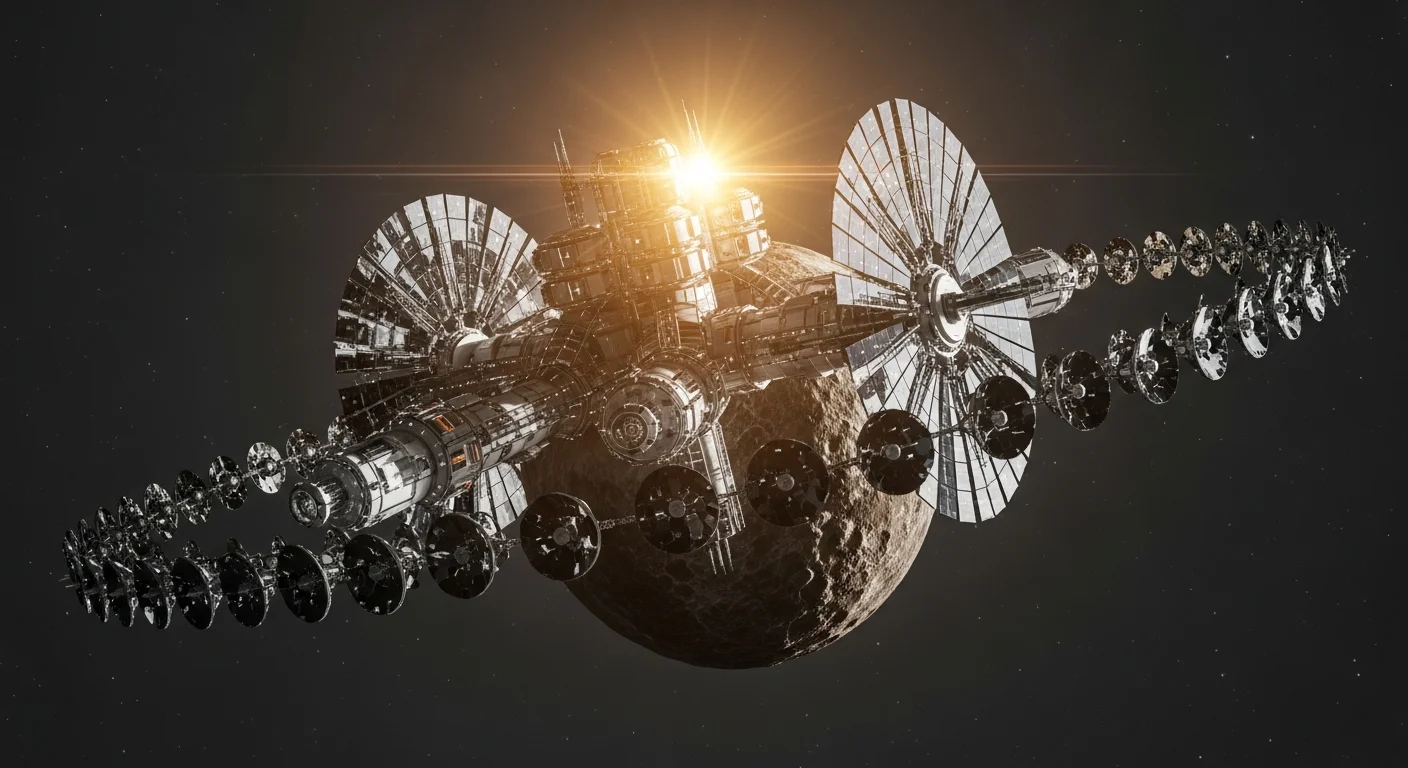
ICARUS STATION
02 // Candidate Accelerator Architecture
The Halo Ring — 10 km superconducting synchrotron
04 // Annihilation Reactor Concept
Variable-yield reactor with optical extraction and dual-mode collection
06 // Z-1 Void Flask
Portable Penning-Malmberg trap — 1015 antiprotons, 500+ days
07 // LPD-1 Collider Dock
Direct beam-beam annihilation power generator
08 // AP-1 Scaling Pathways
Five engineering levers to close the seven-order-of-magnitude gap
09 // Containment Failure and Safety Systems
Layered safety architecture from persistent magnets to controlled dump
12 // Master Specifications
Full system specification table
RESEARCH

PENNING TRAP
Dispatch 001 // The Economics of Nothing
Why antimatter costs trillions per gram and why that will change
Dispatch 002 // Penning Trap Array: 14-Day Confinement
Continuous antihydrogen confinement record
Dispatch 003 // Antihydrogen Production Rate
2.1 × 10⁷ atoms per hour sustained production
13 // Division Integration
Cross-division technology dependencies
FRONTIERS
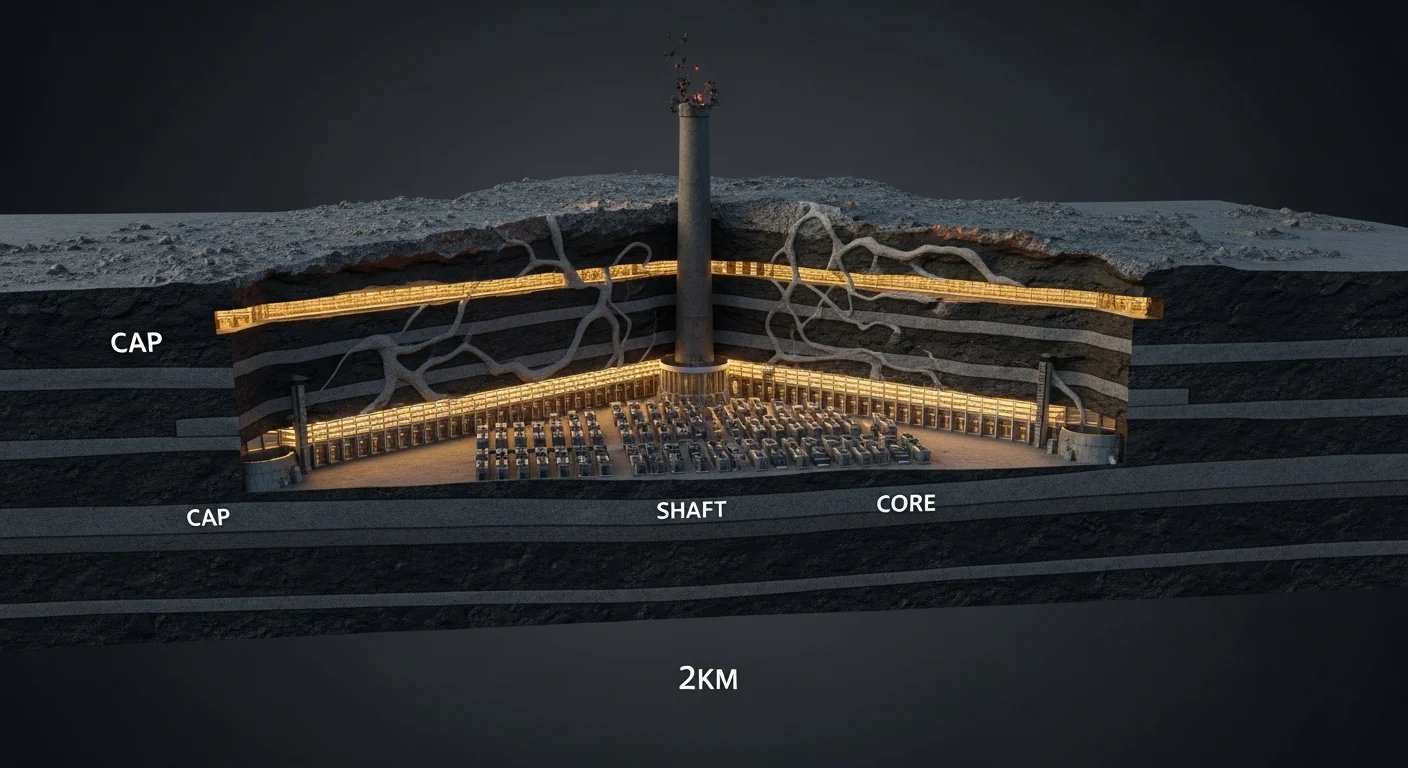
TARTARUS CROSSSECTION
05 // Theoretical Boundary: The Kugelblitz
Upper limit of energy density physics
10 // Facility 01: Icarus Station
Mercury orbital antimatter factory — Schwinger limit production
11 // Facility 02: Project Tartarus
Subterranean antimatter storage — 2 km underground
14 // Antimatter-Catalysed Fusion Ignition
Nanogram-scale antimatter as fusion spark plug
15 // Matter-Antimatter Annihilation Propulsion
Beamed-core engine — Isp 107 seconds
REFERENCES
Bibliography & Research Repository
Full citation index, research links, and source material